Showing posts with label Ford. Show all posts

2011 Mopar Ram Runner - Short Take Road Test

This hop-up kit makes an ordinary Hemi truck look like a Fiat Jolly.

2011 Mopar Ram Runner

Building on its rich history of street machines and wheel-standing drag cars, Chrysler’s Mopar group is now entering the mud-spattered off-roading arena with this, its answer to Ford’s F-150 SVT Raptor. True to the brand’s character, the Mopar Ram Runner package for the Ram 1500 is to the unpaved realm what the Dodge Challenger Drag Pak is to the quarter-mile.
Unlike the Raptor ($42,930 base price), the Ram Runner is a not a regular-production vehicle. Instead, it is a collection of  bits available from Mopar that can be fitted to any current-gen Ram 1500 4x4 with a six-foot-four-inch bed. Co-developed with Kroeker Off-Road Engineering, the Ram Runner’s Stage 2 package ($13,270) leverages the latest Ram’s all-coil-spring suspension for maximum off-road potency.
It’s a serious upgrade over Mopar’s bolt-on Stage 1 kit ($3129), with Stage 2 adding lengthened and reinforced front control arms, heavy-duty tie-rods and ball joints, and fat, 3.0-inch Fox internal-bypass front and rear shocks. Those monster dampers support 14 inches of wheel travel at both ends, with the truck’s overall height rising 3.5 inches (to 79.2) with the recommended 35-inch-tall tires. Ground clearance gets a similar lift, to 13 inches.
Nearly $7000 in other Mopar parts makes up the full Ram Runner package and further transformed our $34,690 SLT 4x4 Quad Cab tester into a $61,863 desert truck: flared fiberglass fenders ($1020) and bed sides ($1350) that increase overall width by 6.0 inches to a driveway-choking 85.4, a gnarly tube front bumper and skid plate ($1250), a bed-mounted spare-tire carrier ($1010), an aluminum hood ($978), a cat-back exhaust system ($1135), and a set of all-weather floor mats ($70). The not-so-subtle Mopar vinyl wrap seen on our test vehicle might actually be added to the catalog, for those determined to assist Mopar’s marketing efforts.
Additional aftermarket bits include a pair of super-bright LED light bars ($1400) and HID auxiliary lights ($600), 17-inch Pro-Comp wheels ($940) with BFGoodrich Mud Terrains ($1500), a full roll cage ($1000), and Mastercraft front seats with five-point harnesses ($1200).
The Runner shined on the sand dunes of Michigan’s Silver Lake State Park, where the suspension’s initial stiffness gave way to a mechanical cushion that, at highway speeds, soaked up launches and knee-high obstacles. Thanks to the Hemi’s ample grunt and the truck’s limited-slip rear differential, it was easy to steer with the throttle, and the wider track and big tires helped plant the chassis during high-speed cornering. The overall look and feel is more feral than the Raptor’s and, indeed, the Ram Runner lacks the refinement of a factory-prepped vehicle.
Such a focused package is about as at home on the street as it would be on water, even if the kit does not affect the truck’s factory warranty or its street legality. With its added width, football-field–sized turning radius, and humming mudders, the Ram Runner is predictably clumsy on pavement. Its lowly 0.67 g on the skidpad, even worse than the Raptor we tested most recently (0.70 g), was accompanied by great steaming chunks of cast-off tread. Acceleration from the stock 5.7-liter Hemi V-8 is adequate, pulling the truck’s 5949 pounds (about 250 more than stock) through the quarter-mile in 15.6 seconds at 88 mph. But the 211-foot stop from 70 mph had us wishing for more-pavement-oriented tires. The stock truck’s fuel economy (13 mpg city and 19 highway) also took a hit, as we averaged only 12 mpg on the street and 5 mpg off-road.
Unfortunately, our test was cut short by a transfer-case failure incurred while powering out of deep sand. We suspect the truck’s past beatings might have had something to do with this and that what may be considered “excessive abuse” could affect warranty repairs. The failure highlighted two things: the brutality of off-roading and the fact that the Ram Runner conversion does not touch all of the base truck’s key components.
Chrysler has yet to say if  it will offer a factory version. Depending on your budget and skill level, the Mopar parts can be ordered a la carte for home installation or added to your new or used truck at the dealership. That makes for an attractive alternative to the Raptor for those who don’t want to go whole hog or simply cannot betray their chosen brand. In our minds, the kit’s flexibility makes it all the more attractive if you start with a less-expensive Ram model. As with the equally thirsty Raptor, you’ll need the money you save for fuel.


Source : Caranddriver.com

Automakers Forecasted to Lead the United States Market in 2011

https://blogger.googleusercontent.com/img/b/R29vZ2xl/AVvXsEgUq1aYfH_JnIrLIsJdlx3x8-q0TU98rXm_vY5CY9yRwiV8PV_MlcgcxUwWphwyV32tr2DnD5-cHDtqpPmeGyku5seqMDmgvdzoo83oPO9Nt4My2qubaXZjPBIo5AROfQ55IUeFckXjDQA/s1600/nissan+skyline+2.jpg


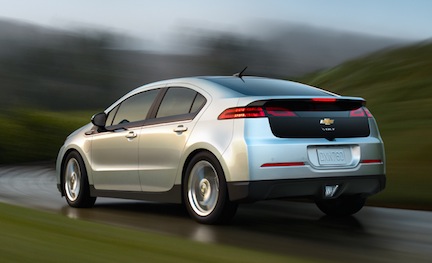
General Motors wants to be the plug-in leader with the Chevrolet Volt, a plug-in hybrid with 40 miles of electric range and 500 miles per gasoline fill-up range. Chevrolet will deliver over 10,000 in 2011. GM has a complete Voltec Propulsion System roadmap that envisions added offerings of pure battery-electric, E85, and diesel. The second plug-in offering from GM is likely to be a Chevrolet Crossover SUV. Look for a range versus cost battle with Toyota, as the Volt achieves more electric range by adding to vehicle cost with a 16kWh battery.
Ford Focus EV 57k 150x150 Top 10 Electric Car Makers 2011Nissan Leaf 115KB 150x150 Top 10 Electric Car Makers 2011Nissan will be the first automaker to put over 10,000 pure battery-electric cars on U.S. highways. 20,000 have made deposits for Nissan Leaf and several cities are in major partnerships. The LEAF can be purchased starting at $32,780 or $349 per month. The Nissan LEAF is battery-electric with a 100-mile range per charge. LEAF Test drive. This 5-door, 5-seat, hatchback has the right size and range for many who drive under 100 miles daily, or for households with more than one car.

Ford will be selling at least two electric cars by the end of 2011 and five models by the end of 2012. The best seller will be the Ford Focus Electric, a battery-electric that we expect to aggressively compete with the Nissan Leaf. Ford will be taking orders for a 2012 C-MAX Energi plug-in hybrid, an exciting Crossover SUV that seats 5. In the future, the Ford Focus available any way the customer wants it: battery-electric, plug-in hybrid, hybrid, or fuel-efficient sedan. Ford is already selling the Transit Connect Electric compact van.
Tesla Test Drive 62k 150x150 Top 10 Electric Car Makers 2011 
Tesla is the first to sell 1,000 electric cars for the U.S. highways. Tesla owners are the first to put 10 million electric miles on the road. Like its Roadster, the company is going zero to sixty in less than four seconds. Tesla is also developing a roomy Model S hatchback that starts at $57,400, about half the price of the Roadster. The Roadster is battery-electric with a 240-mile range; the Model S will have remarkable electric range options of 130 to 300 miles per charge. Tesla is working with shareholder Toyota to bring back the Toyota RAV4 EV, an electric SUV. Tesla is working with shareholder Daimler to put Smart EDs on U.S. streets this year. In the future, the Tesla Model X will be a Crossover SUV for those that want more premium styling and interiors than alternatives from Chevrolet, Ford, and others.
Fisker Karma Addison 49k 150x150 Top 10 Electric Car Makers 2011 
Fisker Karma is a luxury sports plug-in hybrid with prices starting around $90,000. With 20kWh of lithium batteries, you could go 50 miles before the 2L turbo engine is engaged. The Karma invites you to accelerate, using two electric motors that deliver 403 horsepower, so your mileage may vary. In theory it’s a 4-seater; good luck fitting someone in the back seat. The Karma is about sex appeal, performance, and luxury. A more affordable family sedan is planned for 2012.

Scott Lang Prius Plugin 25k 150x150 Top 10 Electric Car Makers 2011Toyota, world-leading seller of hybrids, will offer both plug-in hybrids and pure battery electric cars. The Prius Plug-in Hybrid (PHV) looks like another Prius until you spot the J1772 plug for smart charging. Six hundred PHV are in fleet trails from cities to car sharing services. Next year, you can order the Prius PHV. Toyota will initially control costs by only using a 5kWh battery for a 14-mile electric range. In 2012, Toyota is likely to also offer the RAV4 EV SUV and a pure battery-electric FT-EV small city car.
Honda Fit EV preview 150x90 Top 10 Electric Car Makers 2011Honda is preparing the Honda Fit EV and a plug-in hybrid for sale in the U.S. in 2012. The Fit EV is in demonstration program in fleets such as Google and Stanford University. We speculate that the new EV will use Blue Energy lithium-ion batteries and will price below $29,900.

Mitsubishi is currently the electric car market leader in Japan with the iMiEV.
Mitsubishi i 150x150 Top 10 Electric Car Makers 2011In 2012, the U.S. version of the Mitsubishi I will price at less than $29,900. This fun-to-drive 5 door, 4 seat hatchback, will have a wheel base 5 inches wider for the U.S. market, but the micro-compact will still be able to get those precious city parking spaces that no other car can take except the Smart. The more powerful U.S. version will have an electric range of 50 to 80 miles with a 16kWh lithium battery.
WattStation Smart EV 150x150 Top 10 Electric Car Makers 2011 

 Daimler is bringing the Smart Fortwo ED to the United States. 250 Smart Fortwo ED will be put into U.S. test this year using Tesla battery packs, but smart is currently targeting the 2013 model year for the first commercial electric car. It will start taking consumer and fleet orders in 2012. Daimler also owns 5 percent of Tesla. Mercedes hybrids. BMW will accelerate electric plans in a couple of years. Mercedes is putting into fleet tests two 5-seat hatchback electric cars – the A-Class E-CELL battery-electric car with 120-mile range and the B-Class F-CELL, which adds a hydrogen fuel cell to double the range.
Think City COP 150x150 Top 10 Electric Car Makers 2011 
Think has been selling its smaller battery-electric City car in Europe for years. With new capital from EnerDel, Valmet, and Kleiner Perkins, Think hopes to have its financial struggles in the rear view mirror and be on U.S. roads within a year.


U.S. Electric Car Forecast

Accenture forecasts 1.5 million electric vehicles in the United States by 2015. Over 10 million electric vehicles are possible by 2020, especially if oil prices continue to rise as battery prices fall. Single electric utilities have scenarios for charging over one million electric vehicles in their own service area by 2020. With renewable energy investment required of utilities in 30 states, these utilities are most interested in night time charging of electric vehicles with wind, geothermal, and hydropower. Utilities are also implementing smart grids and incentives for off-peak charging.
By 2011 year-end, competition will be intense for electric car leadership. The above Top 10 describe our best guess about the market share leaders for delivered plug-in vehicles on the United States roads in 2011. Battery-electric vehicles, plug-in hybrids, and electric vehicles with range extended by engines or fuel cells were all considered.
Over 100 competitors will be fighting for U.S. share by the end of 2012. Some may be struggle to get significant share due to the time and cost of safety and other regulatory approvals, delays in funding, unpleasant surprises from a battery, drive system, or component supplier. It’s a tough business. Even Tesla had to add 700 pounds and two years to get the first Roadsters in customers’ hands.

Asia Prepares for the U.S. Market

For three years, we have read about China’s plans to bring electric cars to the U.S. Although China’s U.S. ambitions have slipped badly, its automakers cannot be ignored. China has over 100 million light electric vehicles, e-bikes and e-scooters in daily use. It’s new 5-year plan calls for 100 million electric charging stations in China by 2020. BYD, with gold-plated investors such as Warren Buffett, has only put a few hundred electric vehicles on the road in China and continues to delay introduction to the United States. CODA’s $45,000 sedan continues to seek DOE loans and more investors and has delayed sales until Fall 2011, or later. Volvo, now owned by China’s Geely has the new C30 Drive E Electric. I was impressed with my test drive, but the Volvo electric car will be selling only in Europe in the short-term. SAIC, Chery, and hundreds of players are also preparing EVs for Chin
India might bring us a Maharinda Reva or Nano EV that under prices everyone, but not this year which is the basis for this Top 10 Report.

European Innovation

By 2020, Europe with higher fuel prices and fewer oil subsidies, is forecasted to have more electric cars by 2020 than the U.S. Better Place may deliver 100,000 of the Renault Fluence with its switchable battery to Israel, Denmark, and other countries. Volkswagen may teach everyone how to extend range by making vehicles light. The concept Up Light weighs just over 1,500 pounds, but it’s only a concept. I loved test-driving the Volkswagen Golf Blue E-Motion, but don’t plan on buying it in the U.S. before 2014. You will likely be able to buy the Audi E-Tron sooner. BMW’s first U.S. electric car commercial offering, the Megacity Vehicle, may be a hit in 2013. For fun in the city in 2013, the Fiat 500 EV may be what you want. In other words, there is a lot of European innovation that did not make this Top 10 List, which focuses on the U.S. market for the next 12 months.
Please bookmark this Top 10 List and check back as we update. Exciting new electric cars are being driven on the U.S. streets and freeways. Nissan is an early mover with battery-electric cars and General Motors with plug-in hybrids. Competition will start to heat-up with offerings from Ford, Toyota, Honda, and dozens of Asian, European and American innovators. The winner will be the customer.
Source : cleanfleetreport.com

2011 Ford F-150 FX4 SuperCrew 4x4 EcoBoost V6 - CARS REVIEWS

Is this the best application of Ford’s blown V-6 yet?

2011 Ford F-150 FX4 SuperCrew 4x4 EcoBoost V6
A twin-turbo pickup truck? Well, that just seems silly.
Sure, plenty of pickups have received forced induction - most of them with superchargers, many of them Fords—but the EcoBoost F-150 is a first among production trucks in that it uses a pair of turbos. (GMC’s Syclone, which had a larger V-6, was fed by only one turbocharger. It remains bad-ass.) This also marks the first time Ford’s 3.5-liter EcoBoost engine has appeared in a rear-wheel-drive product, and it’s perhaps the vehicle in which this engine feels most at home.

Putting EcoBoost in Its Place
Tuned to produce 365 hp and 420 lb-ft of torque in the F-150, this iteration of the turbo 3.5-liter V-6 trumps those installed in the Ford Flex and Lincoln MKT and MKS. In this truck, however, it feels much more drivable; trucks aren’t the most responsive vehicles in the first place, mitigating what minimal turbo lag exists. The EcoBoost’s plentiful torque is most useful when doing manly pickup-type tasks, like hauling or towing.
Ford has always touted the EcoBoost V-6 as a downsizing measure, claiming V-8 power with V-6 fuel economy. The power is definitely eight-pot comparable—it makes five more hp more than the F-150’s available 5.0-liter and bests that mill by 40 lb-ft of torque with a much lower torque peak—but so, too, is the fuel consumption, especially if you’re in the boost. For example, a 5.0-liter-equipped F-150 got 14 mpg in our hands, the same as this EcoBoost truck. An F-150 with the naturally aspirated 3.7-liter V-6 did only 1 mpg better.
The EcoBoost engine’s primary advantage over the 5.0—and even the Ford 6.2-liter V-8—is fleetness; of course, that requires a heavy foot. This 4x4 SuperCrew completed the 0-to-60-mph sprint in 6.1 seconds, the 5.0 we tested took 6.7, and a 411-hp 6.2-liter needed 6.3. None of those times is slow, and it should be noted that you can’t really go wrong with the 3.7-liter six, which hits 60 in 7.6 seconds. The V-8s, however, sounded best while turning in their times.
Downsizing the Volume
Our one real complaint, then: A truck this quick should make noises. You should hear it coming and going. The only sounds emanating from the EcoBoost F-150 are a faint turbo whistle and the occasional light sneeze on overrun. It’s quiet—too quiet.
As to the rest of the experience, the truck is as good as any other F-150. The smooth six-speed automatic transmission is the same as in trucks with the V-8s or naturally aspirated V-6, providing downshifts in adequate time when your right foot requests them, and manual control is available via a rocker switch on the shifter if desired. The steering offers acceptable feedback, showing none of the problems we experienced with the setup in a rear-wheel-drive 3.7-liter example. In short, the EcoBoost option requires no compromises—well, beyond the extra cost of the engine.
The cheapest EcoBoost model is a two-wheel-drive F-150 XL with a heavy-duty package and eight-foot bed ($28,185), but our test vehicle was not cheap. The FX4 SuperCrew starts at $40,365 and comes standard with four-wheel drive and the 5.0-liter V-8. Adding the EcoBoost V-6 is $750. This truck also had the FX Luxury package ($1950) with power adjustable pedals, a power sliding rear window, automatic climate control, a sound-system upgrade, backup sensors, a rearview camera, remote start, and heated power front leather buckets. When the grand total crosses the $40,000 barrier, an additional $750 is negligible. It’s a reasonable price to pay for 40 lb-ft of torque alone.
So a capable powerplant has found its best fit, giving the F-150 one more in a lineup of solid engine choices, but the EcoBoost once again fails to live up to the efficiency hype of its name. Aside from its fleetness, it doesn’t make a strong case for upgrading from the 5.0. Luckily, though, there’s no wrong decision.
Source : Caranddriver.com

2011 Ford F-150 4×4 SVT Raptor Review – The most off-road capable truck Ford has ever built

2011 Ford F-150 SVT Raptor
By contributing editor David Colman
Hits:
  • Now with four full-size doors with the Supercrew version
  • New cab configuration increases interior volume and allows for more comfort for rear passengers
  • Large 36 gallon fuel tank
  • Unique Raptor motor roar
  • SelectShift automatic transmission as close to a manual transmission as an automatic can be
Misses:
  • Large 36 gallon fuel tank
  • Uncomfortable upright rear seating position
If Popeye owned a pickup, the Raptor would be it. When you fit the 6.2 liter, 411hp engine to this 4×4’s beefy frame, you’ve got way more muscle than a tin of spinach. No other truck in our care has ever engendered so many conversations. Most of them began with the question, “Is that the Raptor?” because lots of truck fans have been on the lookout for this stout rig since it was announced at the beginning of the 2010 model year. However, the mid-year addition of the $3,000 optional 6.2 liter V-8 motor, which produces 434lb-ft of torque, is just what the hefty 5,850 lb Raptor needed to make it fly. If you need a power boost for passing, the 6.2 is your ticket to the fast lane. On back roads, just drop the massive shift lever into second or third gear, and the Raptor will jump obligingly when you prod the accelerator. On the freeway, in the “Drive” gate, a stomp of the gas pedal instantly drops the rig into passing gear. The 6.2 liter V-8 rocks the truck slightly at idle, and sounds like a motorboat at full chat. It’s a delightful motor that failed to use a full tank of gas during a week of heavy-footed driving.
2011 Ford F-150 SVT Raptor
What’s really going to sell the Raptor is its appearance. Without question, this is the best looking sport truck on the road today. The compendium of stylistic innovations is ingenious. Because the front bumper has been eliminated in favor of a pair of resilient pads, the snout of the Raptor looks clean and nasty. Gigantic “F-O-R-D” letters are so skillfully integrated into the flat black grill matrix that you hardly notice them at first. A bevy of orange running lights cover the front end and illuminate whenever you open a door or lock the truck. They match the shocking “Molten Orange” metallic finish of the exterior. Large operative heat exhaust grills atop the hood mimic nostrils, and a pair of SVT-logo extractor vents add interest to the front flanks. Running boards that look like dinosaur backbones help lift you into the cab.


2011 Ford F-150 SVT Raptor bucket seats
Once inside, you’ll slide into mildly bucketed seats and face a full bevy of instruments, including small gauges for water and oil temp, amp meter for battery charge and fuel gauge. Under them lie the large 7,000 rpm white tachometer face decorated with SVT logo and accompanying speedometer dial. The aluminum trimmed center console features a series of auxiliary switches and buttons for ride control and hill descent. The door panels match the aluminum trim of the console and contribute an upmarket feel to the cabin. SVT logos adorn the rubber floor mats, and Raptor embossments distinguish the front seat headrests. A large and effective $2,430 optional Sony Navigation screen completes the front dash array. A pair of small suicide doors to the rear of the cab can be opened once you’ve released the front doors. The rear seat is uncomfortably vertical, but will accommodate 3 adults in a pinch. Ford has thoughtfully equipped the rear of the center console with sizeable air vents for back benchers.
2011 Ford F-150 SVT Raptor 2011 Ford F-150 SVT Raptor 2011 Ford F-150 SVT Raptor
The Raptor is really all about fast off road travel, and to that end, Ford has not stinted in the suspension department. Clearly visible in every fender well is a remote reservoir “Internal Bypass” Fox Racing Shox featuring a blue anodized SVT cap piece. The front lower A-arms are massive cast aluminum pieces, and the SVT 12 spoke, 8.5 x 17” alloys carry serious off-road wear: 315/70R17 BF Goodrich All Terrain T/As with tri-cord 3-ply sidewalls. The stiffly sprung Raptor squishes these donuts like Play-Dough. Between the tires, the suspension system and the 4×4 geometry there isn’t a piece of terrain that will escape the Raptor’s mighty wrath.
2011 Ford F-150 SVT Raptor Unique cast-aluminum SVT front control arms
2010 FORD F-150 4×4 SVT RAPTOR
  • ENGINE: 6.2 liter 2V EFI V-8
  • HORSEPOWER: 411hp
  • TORQUE: 434lb-ft
  • TRANSMISSION: Six-speed automatic overdrive with tow/haul mode
  • FUEL CONSUMPTION: N/A
  • FRONT 4×4 SUSPENSION: Coil-on-shock, long-spindle double-wishbone independent, aluminum
    lower control arm, forged-steel upper arm, FOX Racing Shox™
  • REAR 4×4 SUSPENSION: Hotchkiss-type non-independent live, leaf springs and outboard shock
    absorbers, FOX Racing Shox
  • PRICE AS TESTED: $48,175
Source : http://reviews.carreview.com/