Showing posts with label cars. Show all posts

2013 Bentley Continental GT - Cars Road Test


http://www.2012-bentley-insight.tk/wp-content/uploads/2011/04/2013-bentley-continental-gt-video-2.jpg
By the time Bentley had finished proliferating its initial Continental line, first offered as a coupe for 2004, no fewer than eight models were on the docket, including convertible and sedan body styles with 552-hp 12-cylinder engines, 600-hp “Speed” versions of all three, and for coupe and ragtop models, lighter Supersports versions with 621 hp. Now, with the second-generation Continental GT coupe on sale around the world, the rollout of variants is set to commence, and the two-door Speed, caught here by our wily spy photographers, looks like it’s in the hole. (We have it on good authority that the regular-grade GTC will appear next, at this fall’s Frankfurt show.)

Stealth Speed
http://www.2012-bentley-insight.tk/wp-content/uploads/2011/04/2013-bentley-continental-gt-video-3.jpg
Only two places on the exterior—the pinched tailpipes and the deeper, three-section lower front fascia—give away this car’s identity as the next speedy Conti. We expect this to be true of the production model, too, as the first-gen Speeds were similarly indistinguishable from the base models. The previous Speeds also featured upsized, thin-spoke wheels (which owners often swapped out for aftermarket pieces), so don’t expect to see these five-spoke 20-inchers, which are the base wheel on the standard Continental GT, to be the production footwear. Also worth noting is that the air suspension of this prototype seems to be jacked up to its Moab setting; the last-gen Speeds rode roughly half an inch lower in their standard setting than their non-Speed counterparts, and we expect this trait to carry over.
More Speed
And so it seems that beneath the sheetmetal is where the big differences will be found. While Bentley won’t tell us much about the next Speed’s powertrain, the previous model added about nine percent more power and 15 percent more torque over the base trim’s twin-turbocharged W-12. If similar math is applied to the 2012 Continental GT’s higher-output W-12, with its 567 hp and 516 lb-ft of torque, the Speed will pack around 621 hp and 590 lb-ft of torque, which coincidentally is the same output as the 2010–2011 Continental Supersports (a car that’s still in production). Go figure. Also worth noting is that the base Continental GT shed some 143 pounds for 2012, and we expect the Speed to maintain that weight loss, if not shed even more. As in every Continental model, power will be routed through an all-wheel-drive system.
How might all of this translate into real-world performance? Well, since we were able to hit 60 mph in four seconds flat in the previous Continental GT Speed coupe, we will probably be able to lop off a tenth or two next time around. Terminal velocity could jump by a few ticks above the 202-mph top end of the last one, too.
Also expect about a 10-percent increase in price over the 2012 Continental GT’s $192,495 sticker when the Speed goes on sale sometime next year as a 2013 model. By then, we hope to see Speed-spec prototypes of the upcoming Continental GTC convertible and the yet-unseen, next-gen Continental Flying Spur sedan.
http://www.2012-bentley-news.tk/wp-content/uploads/2011/04/2012-bentley-continental-gt-2.jpg
Source: Caranddriver.com

2012 BMW 528i / 528i xDrive Sedan - Car News

A four-cylinder 5er, with optional power to all four wheels.

2012 BMW 528i / 528i xDrive Sedan
Just in time for the Fourth of July holiday here in the land of freedom, BMW is announcing a 5-series with four cylinders. (That is the tie-in, right?) For 2012, the 528i will trade its naturally aspirated 3.0-liter inline-six for the company’s new N20 turbo four. Including the recently announced M5, this makes the 5-series engine lineup all-turbo.
The 2.0-liter will produce 240 hp at 5000 rpm and 260 lb-ft of torque from 1250 rpm. That matches the horsepower figure for the old six and surpasses it in the torque department with 30 additional lb-ft, peaking 1350 rpm earlier. The engine is direct injected and uses BMW’s Valvetronic variable-valve-lift system. A ZF-supplied eight-speed automatic will be the only transmission available, although the 2012 528i will see the addition of xDrive all-wheel drive as an option. BMW estimates a 0-to-60-mph run of 6.2 seconds, or 0.4 second better than it quoted for the 2011 car. We netted a 6.4-second run with the inline-six, and expect the turbo four to drop that time to around 6.0.
http://www.speedlux.com/wp-content/uploads/2011/07/a12.jpg
The engine will be equipped with a stop/start system, something BMW usually leaves out of U.S. products because of its limited effect in EPA fuel-economy testing. The EPA hasn’t yet tested this new engine, but BMW expects a 15-percent increase in mileage over the 2011 528i—figure on something like a 2-mpg increase over that model’s 22/32 city/highway ratings.
We know this engine will show up in the Z4 sDrive28i, and you can expect it to show up in the rest of BMW’s 28i offerings, including the next 3-series. You also can expect us to go enjoy the Fourth with a big American V-8.
                  2012 BMW 528i 2.0-liter turbocharged inline-4 engine


Source: Caranddriver.com

2011 Cadillac CTS-V Wagon - CAR REVIEW AND ROAD TEST

http://www.automotiveaddicts.com/wp-content/uploads/2009/11/cadillac-cts-v-sport-wagon-silver.jpg


Date: June 2011
Months in Fleet: 6 months
Current Mileage: 18,334 miles
Average Fuel Economy: 15 mpg
Average Range: 270 miles
Service: $0
Normal Wear: $0
Repair: $120
Damage and Destruction: $566

It’s no surprise that we constantly fight over who gets to drive our long-term CTS-V. After all, a 556-horse punch is incredibly intoxicating, especially when it’s stabled in a station wagon and gallops through a satisfying manual gearbox.
That said, the V’s limited range has continued to be an issue, with only a couple of staffers expanding the car’s sphere of influence beyond state lines. (We’ve nursed a tank to 342 miles on the highway, but when a Lingenfelter-tuned CTS-V coupe showed up on our doorstep, one staffer cracked, “The only modification that car really needs is a bigger gas tank.”) Beyond the frequent stops for fuel, the long-haul reports were glowing. The big supercharged eight lives at the low end of the tach on the highway, which helps prevent aural fatigue, and there’s enough torque on hand that downshifts are optional, even while passing. The optional Recaro seats are firm, but four-way lumbar and adjustable bolsters mean even Inspector Clouseau could find a suitable position. Constant cruising means no annoyance at the chairs rocking in their mounts under braking and acceleration.
https://blogger.googleusercontent.com/img/b/R29vZ2xl/AVvXsEj1qMyBYdTmrxIJINsYltTuyMQokNR147UW_qGpuTsWMkkHNMe8PTld14mGFKzhqnRC5iADxZfufyViMMlwgn0ctk6CZV50kVtyNfAKt35iqTsDumOQ05GVU-yH9SrAQpZtshR4YST21FM/s1600/2011+Cadillac+CTS+V+Wagon+Price+Interior.jpg
So, how is it that with only two out-of-state trips, we’re on pace to cover 40,000 miles in 12 months? The answer lies in how rewarding and easy the CTS-V is to drive, even in everyday situations. Grab a jug of milk? Don’t mind if we do. Picking up the mother-in-law? Glad to. Alterman left his phone at home? Let us go get that for him. Really, we find any excuse to slide behind the V’s sueded steering wheel.
Some Service, Some Damage, All Fun
At 7000 miles, we took the wagon to the dealer for its first service, which involved an oil change and a minor inspection. There is no maintenance schedule per se, because the car calculates when the oil needs to be changed based on factors such as the number of cold starts, engine speed, and time since the last service.
The service itself cost us nothing—routine maintenance is covered for the first four years or 50,000 miles—but it was then we learned that at least one vengeful pothole had deformed the right front wheel. It was bent, big time, and the dealer couldn’t balance it. We ordered a new wheel for $566, a smokin’ deal compared with the almost $1600 we spent to replace one roller on our Infiniti M56S.
A short time later, we availed ourselves of a mobile wheel-repair shop, Alloy Wheel Repair Specialists, to see what it could do for the bent rim. As long as the wheel isn’t carrying a tire, Alloy Wheel will come to you and do its best to set it right. Because the dent was so massive, the technician wasn’t sure he could repair the out-of-round shoe, but he managed to get the wheel to within 0.02 inch of round. This service ran us $120; depending on the damage, it can cost a little more or a little less. Now we have a spare wheel if Michigan’s roads claim another victim.
Rear Window, but This Time without Jimmy Stewart
There has been one issue. Just past the 10,000-mile mark, after a carwash, the right rear window decided it liked being rolled down and that it would handle the task itself. Of course, this was on one of the long trips—to San Antonio, Texas, no less, during which technical editor Michael Austin was on a mission to find the basement of the Alamo. A Cadillac dealership got the window rolled up and disconnected the wiring to the switch; Austin returned to Michigan sans breeze. Once back home, our local dealer diagnosed the problem as some pinched wiring going to the window regulator. Techs futzed with it a little, relieving the pinch, and charged us nothing. It seemed to be fixed.
We say “seemed” because the problem appeared again some 8000 miles later for associate online editor Jon Yanca. This time, we got wet: The window dropped itself during a drive-through carwash’s rinse cycle. Yanca got the window rolled up and disconnected the wiring himself, and our dealer has ordered a new regulator. We hope its installation will exorcise this demon.

The pothole wasn’t the car’s fault, of course, and the window issue isn’t enough to dampen our enthusiasm for the mighty goodness that is our V wagon. As one (potentially jaded) staffer said, “One night in the CTS-V is worth a month of Nissan Leaf, Honda Insight, or Smart nonsense. Who doesn’t love driving this?” The only other gripes thus far involve a comment on the difficulty of casual heel-and-toe shifting and the too-quiet exhaust. Well, there is one more gripe: We have only 20,000 miles left with the CTS-V. Boo-hoo.
Source : Caranddriver.com

2013 Porsche Cayman Spy Photos - Future Cars

No surprise here: The next Cayman looks a lot like the current one, and we’re okay with that.

. http://cdn.24.co.za/files/Cms/General/d/1385/e2815b7c1a4647c8bfb06300ffd1104b.jpg

Update: We now have much closer shots of the next Cayman, and they reveal a more 911-like silhouette and front end. The roof appears flatter than the current car’s, and we can see just how much the stretched wheelbase affects things like the size of the rear window. Less exciting: This prototype appears to have a sensor in the front fascia’s center opening, suggesting some kind of laser- or radar-based system like active cruise control will be offered.

http://www.roadandtrack.com/var/ezflow_site/storage_RT_NEW/storage/images/tests/draft-content/cayman-spy/gallery/photo_2/2513986-1-eng-US/w-porsche-cayman-priddy2_gallery_image_large.jpg
We’ve already spotted the 2012 Boxster in the wild—our editor-in-chief, Eddie Alterman, even snagged a few shots himself—but now we have the first spy photos of the next-gen Boxster’s hardtop sibling, the 2013 Cayman. Since the two cars share a platform, most of what we know about the Boxster will apply to the Cayman as well. This means carry-over flat-sixes, with a new flat-four as the base engine. The current Cayman engine lineup starts with a 265-hp, 2.9-liter flat-six, moving to a 320-hp, 3.4-liter flat-six in the Cayman S. We don’t know much about the new four-cylinder, but it most likely will be a shortened version of the six, rather than an all-new engine. Transmissions are not likely to change much, and the new Cayman should make do with the existing six-speed manual and seven-speed PDK dual-clutch automatic.
The upcoming Boxster will ride on a slightly longer wheelbase, and the Cayman will inherit the same extension. The longer wheelbase shows itself here in the Cayman’s longer rear-quarter windows and the longer roofline. Aside from an expected boost in interior space, perhaps the biggest benefit of the stretch is that the lengthened hatch affords a larger rear window.
Moving down from the roofline, the appearance of the next Cayman will change little from today’s car. The fenders are just as curved and pumped-out as the current Cayman’s, and the vertical intakes ahead of the rear wheels remain—how else are you going to feed a mid-mounted engine? While our shooter failed to snap any pictures of the front of the car, we got a clear look at the Boxster’s schnozz, and we can confidently say that not much will change up front for the coupe, either. (This is sort of a habit at Porsche; note how similar the next 911 will be to the current car—and the one before that, and the one before that, and so on.)
Then again, we can’t think of much we want to change. In an era of tremendous upheaval in the auto industry, Porsche’s mid-engine coupe is one thing we’re glad to see stay the same. Look for better, crisper pictures of the Cayman as its official debut sometime in mid-2012 draws near.
 Source: Carandriver.com

2011 Porsche Panamera 4S - CARS REVIEWS 2011

It’s what’s inside that counts most.

2011 Porsche Panamera 4S
What Is It?
Well, we’re still not sure. This all-wheel-drive S model is the fourth Panamera variant we’ve tested, and the hatchback-cum-sedan’s shape still hasn’t completely grown on us. It is agreed, however, that the Panamera is plenty agreeable to drive—and easier to enjoy from inside. Fortunately, that’s where they put the steering wheel and all of the important controls. Bless those Germans.
How Does It Drive?

The great thing about the Panamera is that you drive it, and not the other way around, as is the case with many big-buck sedans. There are no nanny systems to beep, blink, or otherwise distract, and, with the exception of launch control, there are no technoid aids. The launch control is the PDK transmission’s party trick—although other drivers may be too busy trying to figure out what the car is to challenge you to a race—and teams up here with all-wheel drive, a 400-hp V-8, and some fat Michelin Pilot Sport PS2 rubber to deliver a 4.2-second 0-to-60-mph time. That’s 0.5 second quicker than the rear-drive Panamera S. To put things in five-door perspective, the 4S trails our 556-hp Cadillac CTS-V wagon long-termer by just a tenth.
The Panamera’s steering is Porsche light, but offers the kind of feedback and accuracy that’s a boon on a back road and welcome on a highway cruise, where fewer corrections are better. The interior works well in both situations, too—it’s all-day comfortable, nicely detailed, and functional. Our favorite detail: the ultra-configurable color display that lives in the right-most gauge crescent. We set it up just right for a weekend trip, displaying speed-limit signs at the top and showing range, distance and time to destination, and audio info on the customizable “vehicle” screen. A nav display, trip computer, and phone menu are a flick away using the steering-wheel-mounted thumbwheel.
Over that 500-mile trip, we saw 24 mpg, meaning the car’s 26.4-gallon fuel tank can deliver a range of more than 600 miles. Our overall observed fuel economy was 20 mpg, smack dab in the middle of the EPA’s 16/24 city/highway ratings. Not bad, given the 4200-plus-pound curb weight and our heavy right feet.
How Does It Stack Up?
Despite having several near-competitors in its niche—which was essentially magicked out of thin air—the Panamera 4S may be most easily compared to its sister cars, which have recently expanded to include the S hybrid and Turbo S models. Comparables for the 4S from other makers include the cheaper and softer Audi A7, the harder-edged Mercedes-Benz CLS AMG, and the upcoming BMW 6-series Gran Coupé, which figures to lean more to the grand-touring side of the ledger. This Porsche offers a unique blend of agile, precise handling and comfort.
What’s the Cost?
As with any Porsche, this one’s up to you. The base price of $96,175 isn’t bad as full-bore Euro luxury sedans go (a rear-wheel-drive S can be had for about $5K less—bargain!). But you’ll surely want to spec the Sport Chrono Package Plus for $1480, because it adds the launch control. Then there was our test car’s extra leather for the seats and dash, which, while playing with funny money, we might as well get, too. We would, however, skip this car’s optional 20-inch wheels and their $3120 upcharge, as well as the colored-in center caps ($185). This example also had ventilated front seats for $800, a $1990 Bose audio upgrade, extra-cost paint ($790), and the $2350 Premium package, for a (hundred-)grand total of $110,545.
That’s undoubtedly a lot of money, but would you expect hyper-quick weirdness to be affordable?

Specifications

VEHICLE TYPE: front-engine, 4-wheel-drive, 4-passenger, 5-door hatchback

PRICE AS TESTED: $110,545 (base price: $96,175)

ENGINE TYPE: DOHC 32-valve V-8, aluminum block and heads, direct fuel injection

Displacement: 293 cu in, 4806 cc
Power (SAE net): 400 hp @ 6500 rpm
Torque (SAE net): 369 lb-ft @ 3500 rpm

TRANSMISSION: 7-speed dual-clutch automatic with manual shifting mode

DIMENSIONS:
Wheelbase: 114.9 in Length: 195.6 in
Width: 76.0 in Height: 55.8 in
Curb weight: 4247 lb

C/D TEST RESULTS:
Zero to 60 mph: 4.2 sec
Zero to 100 mph: 11.0 sec
Zero to 130 mph: 20.3 sec
Zero to 150 mph: 30.4 sec
Street start, 5–60 mph: 4.9 sec
Top gear, 30–50 mph: 2.8 sec
Top gear, 50–70 mph: 3.4 sec
Standing ¼-mile: 12.8 sec @ 108 mph
Top speed (drag limited): 175 mph
Braking, 70–0 mph: 159 ft
Roadholding, 300-ft-dia skidpad: 0.92 g
FUEL ECONOMY:
EPA city/highway driving: 16/24 mpg
C/D observed: 20 mpg
Source : Caranddriver.com

2011 Lotus Evora S - Short Take Road Test

2011 Lotus Evora S
Aside from the expected practicality limitations of a purist’s sports car, we’ve found the regular Lotus Evora to be a pretty satisfying machine. It’s as balanced as a tightrope walker and has laser-precise steering, limpet grip, and strong braking.
And yet. In two test-track appearances (one a comparison test and the other at Lightning Lap 5), our primary gripe with the Evora was its limited power. Its Toyota-supplied, 3.5-liter V-6 delivers 276 hp and 258 lb-ft of torque. That’s okay for ordinary transportation but tepid in a semi-exotic sports car.
The 345-hp supercharged V-6 that powers the Evora S finally delivers the thrust that the model’s exotic styling has always promised.
A note in the Evora’s Lightning Lap synopsis summed it up: “The 345-hp Evora S cannot arrive soon enough.”
Well, here you go. With an Australian-made Harrop supercharger churning a modest 5.5 psi of boost, output of the otherwise unmodified V-6 jumps to 345 hp at 7000 rpm and 295 lb-ft at 4500. (We recently featured the Evora S as part of our “Name that Exhaust Note” series: Click here to have a listen.)
Those are big gains, giving this little missile the speed to match its ready–for–Le Mans styling. The standard Evora does 0-to-60 mph in 4.9 seconds, 0 to 100 in 11.8, and the quarter-mile in 13.4 at 105 mph. Top speed is 162. Despite a slight weight increase—3171 pounds versus 3093—the Evora S reaches 60 in 4.3 and 100 in 10.4, and it covers the quarter-mile in 12.8 at 110. It also adds 10 mph to top speed.
The S also responds to another Evora gripe, namely shift quality. New shift cables lend more certainty to rowing the six-speed Toyota-Aisin gearbox. The throws are still long and the feel is still a little clunky, but the engagements are positive. The new cables will eventually make it into the standard car’s transmission. When, exactly, Lotus hasn’t determined.
Clutch takeup is sweet—no lurches—and power delivery is linear, making speed accumulation deceptive. (Tell that to the arresting officer and let us know if it works.)
originalOkay, so quicker and faster, and not by just a little. So what else do you get with the “S” badge? There are minor cosmetic licks, but the key elements are functional: revised suspension bushings, new forged aluminum upper control arms, stiffer rear anti-roll bar, and revised damping. Our test car also was equipped with an optional wheel package ($2950)—19-inch front, 20-inch rear—with Pirelli P Zero Corsa LS Asimmetrico tires: directional 235/35 fronts, asymmetrical 275/30 rears. Thus shod, the Evora S pulled an impressive 0.98 on the skidpad and stopped from 70 mph in an eyeball-stretching 146 feet—just five feet off the best 70-to-0 braking distance we’ve recorded for a production car (the Corvette ZR1’s 141 feet).
Dynamically, the Evora S duplicates the standard Evora’s telepathic responses, though bends arrive quicker and the cornering limits are higher. This is a sports car that inspires confidence quickly, and vindicates confidence as the driver explores the capabilities of both himself and the car. We’ve noted a willingness to oversteer in previous Evora encounters, particularly on the race track. On the other hand, the car provides warning via a progressive transition, and it’s a manageable sports-car trait that a driver can exploit given some experience. The Evora gets a little lively on rough surfaces but keeps its driver informed of every nuance; the partnership here is about as good as it gets.
As with the basic car, the Evora S achieves its exceptional response without beating its occupants senseless. Patchy pavement is impossible to ignore, and there’s considerable noise transmitted by the suspension, but the damping and still-light curb weight soften the nastiest edges.
We mentioned practicality limitations, and like the basic Evora, the S has its fair share, particularly by contemporary sports-car standards. For example, like almost every Lotus, this one makes us wonder about the shoe size of the company’s founder. Judging by the footwells and space between pedals, the founder’s feet must have been minis, and if you’re wearing, say, size 10 or above, operating one pedal to the exclusion of one or the others requires care. There’s also no dead pedal, and the driver often finds himself dangling his left foot behind the clutch pedal when actuation isn’t required.
There are other ergonomic quirks that are difficult to find charming. Awkward ingress and egress, for example, although once the driver is settled in, the seats are supportive and comfortable. A rear-view camera mitigates some of the drama that goes with backing up, but the Evora’s tiny rear window and vast rear blind spots lend an unwelcome element of mystery. And as with the standard Evora, this car’s collection of switchgear can be charitably characterized as erratic and the nav system is byzantine.
With a base price of $77,175, the Evora S is $12,000 more than the basic Evora. Lotus points out that the S includes equipment—the Sport package ($1275) and the Sports-Ratio gearbox ($1500)—that’s optional on the Evora. So the difference is really only $9225.
Our test car included a $2500 Premium package (leather, heated seats), a $2995 Technology package (navigation), premium audio ($695), a rearview camera ($495), the $2950 wheel/tire package, paint-protection film ($995), and “lifestyle paint” ($1500).
All for a grand total of $89,305. That’s Porsche 911 Carrera S money for car that is hard to take seriously as a daily driver. On the other hand, the Lotus is far more exclusive than the Porsche. And track days may be more thrilling.

2011 Nissan 370Z Sport Review - CARS REVIEWS 2011

2011 Nissan 370ZPros:

Great improvement over the successful 350Z
Nice body lines, Rays wheels are icing on the cake
Powerful motor with great sound
GTR influence

Cons:

Manual transmission not as slick as the competition
No lumbar support or telescoping steering wheel
Either less weight or more power and this could be an exotic challenger for a fraction of the cost

41 years ago Nissan (Datsun in the US) launched the 240Z onto our shores and turned the sports car market on its head. Here was a light, nimble, reliable, value oriented sports coupe for two which had decent cargo capacity. I had the pleasure of owning and wrenching on various Z cars through the 300ZX and still found the 240Z to be the purist of them all. Only when Nissan introduced the 350Z in 2003 did it appear that they had something of real value that could match their original Z sports car.

2011 Nissan 370Z

Just like the Porsche 911, Nissan has raised the level of performance and comfort through the years while paying tribute to its Spartan roots. Sure Porsche got a big head start (approximately 6 years), but Nissan has paid close attention to the formula which Porsche, and Chevrolet with the Corvette, have successfully followed through the years. Now the latest incarnation of the Z has brought this car very close to the level of its big brother GTR, but falls short in a few areas we will discuss later. Address these issues and keep the sticker under $40k, and except for some small back seats, the Z could overtake the GTR. Sound like the Cayman-911 argument? déjà-vu.

Design

From the early days of the 240-Z through the 300ZX years, Z cars were influenced by everything from the likes of Jaguar, Chevrolet, Ferrari and even Lotus; a Japanese version of these cars if you will. With the 350Z, Nissan took its La Jolla California design studio concept and brought it to production, and it was an instant hit. This sixth generation 370Z has improved the concept further by building out the fender flares and sharing design cues from the GTR, which share the same E platform as the current Infiniti G Coupe, FX, and Renault Alpine. It’s wider than the 350Z (read grip), and shorter than the previous Z (read quicker turning.)

Nissan 370Z 19-inch 5-spoke RAYS® super-lightweight forged alloy wheels

The exterior fender flares results in a menacing look without being portrayed as a silly phallic symbol. When traffic approaches from the rear side, eyes will be pinned on the fenders and the beautiful Rays wheels our test car was equipped with. From all angles, the Z looks like it means business. The front bumper has GTR influences and also looks equally menacing on approach, so much so that mothers with small children quickly gathered the tykes as we rolled down neighborhood streets. It makes a statement like no other car with an under $30k base price. Our test car had an unusual Black Cherry paint finish, but the 370Z really looks best in bright silver.
2011 Nissan 370Z
Drive Impressions
This is the truest version of the 370Z; the base car with the Sport Package ($3000), adding limited slip, 19” Rays Wheels, front and rear spoilers, and larger front brakes. Along with this comes a $580 add on for the matching Nismo brake pads. The finely tuned 3.7L engine makes 332 hp and launches the Z down the road with one of the best sounds from a V6 engine, powerful and smooth.  Acceleration is pretty fierce and the amount of grip with the 275’s out back is serious. We turned off the traction control and the Z felt planted in the twisties, with plenty of torque to pull it up the most aggressive mountain roads with ease.
We mentioned that the 370Z has a shorter wheelbase than the 350Z, resulting is a faster turning car, but with that you get more jounce in the ride, especially over rough surfaces. Luckily, Nissan did a great job tuning the non-sport mode suspension to be fairly compliant, saving our brains on long freeway drives.
Nissan 370Z SynchroRev Match® manual transmission
The Z’s manual transmission is probably the weak point of the whole car, not the ratios but the long throws of the shifter and clutch. This becomes most apparent when trying to go fast. We loved the sport mode, which stiffened the suspension, created more top end power from the motor, and activated the SynchroRev Match®, but this still didn’t address the throws of the transmission. We would suggest a dual clutch semi automatic transmission similar to the GTR, as that will shift faster than 99% of the humans out there. The wheels and tires were great, but Nissan could probably widen them another inch and still clear the fenders.
Nissan is at a point where the 370Z is getting eerily close to the flagship GTR in performance and looks. In fact, the 370Z tends to be more noticeable due to its aggressive fenders, beautiful wheels, and low stance. If they added 90 hp to the motor and AWD, it would be an R8 or Gallardo contender for less than $45k. Nissan has the platform, but a 370Z set up this way might obviate the need to produce the Skyline, or at least to carry it in this country. Sorry GTR fans, but 600 lbs is 600 lbs.
Nissan 370Z dash mounted cluster gauges
Comfort and Convenience
Just like the exterior, the interior is all business; no navigation, no XM radio, no power seats, not even leather; all of this kept our test car below a 3300 pound curb weight. Just a simple black interior with gray accents, along with tasteful brushed aluminum weaved into the scheme. The gauges are a combination of analog and digital, and strike a balance that makes immediate sense to the uninitiated, with the center dash being the traditional clock, oil temp and volt meter. Interior fit and finish is very good and up to the level of Nissan’s best. Materials and appearance are great; they didn’t try to get all fancy, so everything looks like it belongs.
Although the seating is low and comfortable, the Z could accommodate more drivers with a telescoping wheel, manually adjustable seat bolsters and a lumbar support. Most of our test drivers liked the eight way manually adjustable driver’s seat once they spent a little time making those adjustments. Owners of the 370Z learn to travel light. There is a tray (to place a small bag) and a compartment behind each seat, which expands storage beyond the rear area under the hatchback. There is only one cup holder, two bottle holders in the door panels, and no sunglass compartment at ceiling level; again all business.

2011 Nissan 370Z rear cargo area and chassis brace
This Z is more aggressive in exterior design than its predecessor and this becomes apparent when you have to go into reverse or change lanes, as rearward vision is somewhat limited; better than a Gallardo or R8, but still limited. It helped to open the window when backing into parking slots. The 2011 370Z claims to have more fender well and undercar insulation than the 2010 370Z, but the optional sport package tires still brought in a lot of road noise at freeway speeds. The car could also benefit from wind tunnel testing with the windows down, at speeds above 25 mph there is a distinct buffeting flutter when the windows are rolled down.
At Home on the Road or at the Track
The 370Z is probably one of the most purposeful 2 seat sports coupes made today. It can be driven calmly as a daily driver and can double as a canyon or track attack vehicle. It has aggressive lines that make an instant statement (almost exotic) when you pull up in front of your friends. Nissan makes no difference in output between their base and touring models (save Nismo with 20 more HP), so out of the box the engine propels the car to 60 in under 5 seconds. Overall mileage was about 19 MPG; keep in mind there was a lot of pedal to the metal during the weekend test.
2011 Nissan 370Z
Yes there are other practical 2+2 sports coupes available for less than $35k, like the American Pony Cars or Hyundai Genesis, but if you are looking for a purpose built two seat coupe you can live with every day, this is the one. The closest competitors are the Corvette and Cayman, but these move you $10k higher without the striking looks. This is an excellent value for a performance ride, just make sure you test both the manual and automatic transmissions before buying. Nissan is really pushing their 370Z slogan; Passionate Performance at an Excellent Value. It’s 1970 all over again, just in a Z that’s 2X faster and 5X more comfortable than the original Datsun.

BUILD INTERIOR PERFORMANCE HANDLING STYLING VALUE OVERALL
RATING 4.25 4.25 4.75 4.5 4.75 4.5 4.5 / A-
 Source : Carreview.com

2011 Mopar Ram Runner - Short Take Road Test

This hop-up kit makes an ordinary Hemi truck look like a Fiat Jolly.

2011 Mopar Ram Runner

Building on its rich history of street machines and wheel-standing drag cars, Chrysler’s Mopar group is now entering the mud-spattered off-roading arena with this, its answer to Ford’s F-150 SVT Raptor. True to the brand’s character, the Mopar Ram Runner package for the Ram 1500 is to the unpaved realm what the Dodge Challenger Drag Pak is to the quarter-mile.
Unlike the Raptor ($42,930 base price), the Ram Runner is a not a regular-production vehicle. Instead, it is a collection of  bits available from Mopar that can be fitted to any current-gen Ram 1500 4x4 with a six-foot-four-inch bed. Co-developed with Kroeker Off-Road Engineering, the Ram Runner’s Stage 2 package ($13,270) leverages the latest Ram’s all-coil-spring suspension for maximum off-road potency.
It’s a serious upgrade over Mopar’s bolt-on Stage 1 kit ($3129), with Stage 2 adding lengthened and reinforced front control arms, heavy-duty tie-rods and ball joints, and fat, 3.0-inch Fox internal-bypass front and rear shocks. Those monster dampers support 14 inches of wheel travel at both ends, with the truck’s overall height rising 3.5 inches (to 79.2) with the recommended 35-inch-tall tires. Ground clearance gets a similar lift, to 13 inches.
Nearly $7000 in other Mopar parts makes up the full Ram Runner package and further transformed our $34,690 SLT 4x4 Quad Cab tester into a $61,863 desert truck: flared fiberglass fenders ($1020) and bed sides ($1350) that increase overall width by 6.0 inches to a driveway-choking 85.4, a gnarly tube front bumper and skid plate ($1250), a bed-mounted spare-tire carrier ($1010), an aluminum hood ($978), a cat-back exhaust system ($1135), and a set of all-weather floor mats ($70). The not-so-subtle Mopar vinyl wrap seen on our test vehicle might actually be added to the catalog, for those determined to assist Mopar’s marketing efforts.
Additional aftermarket bits include a pair of super-bright LED light bars ($1400) and HID auxiliary lights ($600), 17-inch Pro-Comp wheels ($940) with BFGoodrich Mud Terrains ($1500), a full roll cage ($1000), and Mastercraft front seats with five-point harnesses ($1200).
The Runner shined on the sand dunes of Michigan’s Silver Lake State Park, where the suspension’s initial stiffness gave way to a mechanical cushion that, at highway speeds, soaked up launches and knee-high obstacles. Thanks to the Hemi’s ample grunt and the truck’s limited-slip rear differential, it was easy to steer with the throttle, and the wider track and big tires helped plant the chassis during high-speed cornering. The overall look and feel is more feral than the Raptor’s and, indeed, the Ram Runner lacks the refinement of a factory-prepped vehicle.
Such a focused package is about as at home on the street as it would be on water, even if the kit does not affect the truck’s factory warranty or its street legality. With its added width, football-field–sized turning radius, and humming mudders, the Ram Runner is predictably clumsy on pavement. Its lowly 0.67 g on the skidpad, even worse than the Raptor we tested most recently (0.70 g), was accompanied by great steaming chunks of cast-off tread. Acceleration from the stock 5.7-liter Hemi V-8 is adequate, pulling the truck’s 5949 pounds (about 250 more than stock) through the quarter-mile in 15.6 seconds at 88 mph. But the 211-foot stop from 70 mph had us wishing for more-pavement-oriented tires. The stock truck’s fuel economy (13 mpg city and 19 highway) also took a hit, as we averaged only 12 mpg on the street and 5 mpg off-road.
Unfortunately, our test was cut short by a transfer-case failure incurred while powering out of deep sand. We suspect the truck’s past beatings might have had something to do with this and that what may be considered “excessive abuse” could affect warranty repairs. The failure highlighted two things: the brutality of off-roading and the fact that the Ram Runner conversion does not touch all of the base truck’s key components.
Chrysler has yet to say if  it will offer a factory version. Depending on your budget and skill level, the Mopar parts can be ordered a la carte for home installation or added to your new or used truck at the dealership. That makes for an attractive alternative to the Raptor for those who don’t want to go whole hog or simply cannot betray their chosen brand. In our minds, the kit’s flexibility makes it all the more attractive if you start with a less-expensive Ram model. As with the equally thirsty Raptor, you’ll need the money you save for fuel.


Source : Caranddriver.com

2011 Saab 9-5 2.0T Premium - Short Take Road Test

Saab’s best deal may be a limited-time offer.

2011 Saab 9-5 2.0T Premium


It was just last year that GM shoved Saab off its headquarters’ roof. As the Swedish brand plummeted to its demise, a bird, er, a plane—no, Spyker swooped in and saved it, thus putting Spyker into free-fall. Quite a shame, really, because the 9-5 sedan is by far Saab’s best product in recent memory.
At the bottom of the 9-5 range is this front-drive model powered by a 2.0-liter four with direct injection and a twin-scroll turbocharger. It’s not nearly as quick as the uplevel all-wheel-drive V-6 turbo model—6.3 seconds to 60 mph [C/D, December 2010]—and it loses an ounce of exterior flair without the top-trim Aero’s optional 19-inch wheels, but its competent dynamics and roughly 10-grand-cheaper point of entry make it the deal of the lineup.
The little four delivers its 220 horsepower and 258 pound-feet of torque through a six-speed automatic, resulting in a ho-hum 0-to-60 time of 7.9 seconds. Once moving, though, the 2.0T has no trouble hustling its 3886-pound load through passing maneuvers. The quarter-mile arrives in 16 seconds flat at 90 mph, but those looking to eke out a bit more performance have the option of filling up with E85. Saab claims no change in output with the higher-octane corn juice, but we saw an improvement of 0.2 second to 60 mph and a 0.1-second-quicker quarter-mile. Efficiency is the penalty here; we observed 17 mpg with E85 and 22 overall with gas. The EPA ratings are 18 mpg city and 28 highway (with gasoline).
From the helm, the steering is playful, but the level of  feedback doesn’t quite match the surprising athleticism provided by the strut layout up front and the multilink setup in back. The flat cornering, though, comes at the cost of a stiff ride. While the brake pedal on our test car was spongy, the car stopped from 70 mph in a commendable 166 feet.
The 9-5’s tailored sheetmetal, approachable price, and roomy cabin provide an attractive way to enter the premium segment. But with the company’s small dealer network and financial issues, Saab needs a superhero to swoop in once again.
Source : Caranddriver.com

Automakers Forecasted to Lead the United States Market in 2011

https://blogger.googleusercontent.com/img/b/R29vZ2xl/AVvXsEgUq1aYfH_JnIrLIsJdlx3x8-q0TU98rXm_vY5CY9yRwiV8PV_MlcgcxUwWphwyV32tr2DnD5-cHDtqpPmeGyku5seqMDmgvdzoo83oPO9Nt4My2qubaXZjPBIo5AROfQ55IUeFckXjDQA/s1600/nissan+skyline+2.jpg


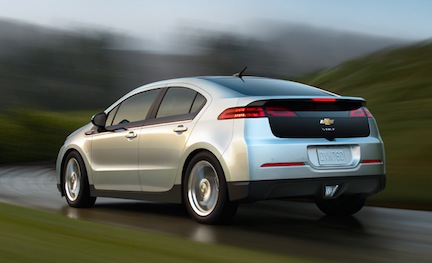
General Motors wants to be the plug-in leader with the Chevrolet Volt, a plug-in hybrid with 40 miles of electric range and 500 miles per gasoline fill-up range. Chevrolet will deliver over 10,000 in 2011. GM has a complete Voltec Propulsion System roadmap that envisions added offerings of pure battery-electric, E85, and diesel. The second plug-in offering from GM is likely to be a Chevrolet Crossover SUV. Look for a range versus cost battle with Toyota, as the Volt achieves more electric range by adding to vehicle cost with a 16kWh battery.
Ford Focus EV 57k 150x150 Top 10 Electric Car Makers 2011Nissan Leaf 115KB 150x150 Top 10 Electric Car Makers 2011Nissan will be the first automaker to put over 10,000 pure battery-electric cars on U.S. highways. 20,000 have made deposits for Nissan Leaf and several cities are in major partnerships. The LEAF can be purchased starting at $32,780 or $349 per month. The Nissan LEAF is battery-electric with a 100-mile range per charge. LEAF Test drive. This 5-door, 5-seat, hatchback has the right size and range for many who drive under 100 miles daily, or for households with more than one car.

Ford will be selling at least two electric cars by the end of 2011 and five models by the end of 2012. The best seller will be the Ford Focus Electric, a battery-electric that we expect to aggressively compete with the Nissan Leaf. Ford will be taking orders for a 2012 C-MAX Energi plug-in hybrid, an exciting Crossover SUV that seats 5. In the future, the Ford Focus available any way the customer wants it: battery-electric, plug-in hybrid, hybrid, or fuel-efficient sedan. Ford is already selling the Transit Connect Electric compact van.
Tesla Test Drive 62k 150x150 Top 10 Electric Car Makers 2011 
Tesla is the first to sell 1,000 electric cars for the U.S. highways. Tesla owners are the first to put 10 million electric miles on the road. Like its Roadster, the company is going zero to sixty in less than four seconds. Tesla is also developing a roomy Model S hatchback that starts at $57,400, about half the price of the Roadster. The Roadster is battery-electric with a 240-mile range; the Model S will have remarkable electric range options of 130 to 300 miles per charge. Tesla is working with shareholder Toyota to bring back the Toyota RAV4 EV, an electric SUV. Tesla is working with shareholder Daimler to put Smart EDs on U.S. streets this year. In the future, the Tesla Model X will be a Crossover SUV for those that want more premium styling and interiors than alternatives from Chevrolet, Ford, and others.
Fisker Karma Addison 49k 150x150 Top 10 Electric Car Makers 2011 
Fisker Karma is a luxury sports plug-in hybrid with prices starting around $90,000. With 20kWh of lithium batteries, you could go 50 miles before the 2L turbo engine is engaged. The Karma invites you to accelerate, using two electric motors that deliver 403 horsepower, so your mileage may vary. In theory it’s a 4-seater; good luck fitting someone in the back seat. The Karma is about sex appeal, performance, and luxury. A more affordable family sedan is planned for 2012.

Scott Lang Prius Plugin 25k 150x150 Top 10 Electric Car Makers 2011Toyota, world-leading seller of hybrids, will offer both plug-in hybrids and pure battery electric cars. The Prius Plug-in Hybrid (PHV) looks like another Prius until you spot the J1772 plug for smart charging. Six hundred PHV are in fleet trails from cities to car sharing services. Next year, you can order the Prius PHV. Toyota will initially control costs by only using a 5kWh battery for a 14-mile electric range. In 2012, Toyota is likely to also offer the RAV4 EV SUV and a pure battery-electric FT-EV small city car.
Honda Fit EV preview 150x90 Top 10 Electric Car Makers 2011Honda is preparing the Honda Fit EV and a plug-in hybrid for sale in the U.S. in 2012. The Fit EV is in demonstration program in fleets such as Google and Stanford University. We speculate that the new EV will use Blue Energy lithium-ion batteries and will price below $29,900.

Mitsubishi is currently the electric car market leader in Japan with the iMiEV.
Mitsubishi i 150x150 Top 10 Electric Car Makers 2011In 2012, the U.S. version of the Mitsubishi I will price at less than $29,900. This fun-to-drive 5 door, 4 seat hatchback, will have a wheel base 5 inches wider for the U.S. market, but the micro-compact will still be able to get those precious city parking spaces that no other car can take except the Smart. The more powerful U.S. version will have an electric range of 50 to 80 miles with a 16kWh lithium battery.
WattStation Smart EV 150x150 Top 10 Electric Car Makers 2011 

 Daimler is bringing the Smart Fortwo ED to the United States. 250 Smart Fortwo ED will be put into U.S. test this year using Tesla battery packs, but smart is currently targeting the 2013 model year for the first commercial electric car. It will start taking consumer and fleet orders in 2012. Daimler also owns 5 percent of Tesla. Mercedes hybrids. BMW will accelerate electric plans in a couple of years. Mercedes is putting into fleet tests two 5-seat hatchback electric cars – the A-Class E-CELL battery-electric car with 120-mile range and the B-Class F-CELL, which adds a hydrogen fuel cell to double the range.
Think City COP 150x150 Top 10 Electric Car Makers 2011 
Think has been selling its smaller battery-electric City car in Europe for years. With new capital from EnerDel, Valmet, and Kleiner Perkins, Think hopes to have its financial struggles in the rear view mirror and be on U.S. roads within a year.


U.S. Electric Car Forecast

Accenture forecasts 1.5 million electric vehicles in the United States by 2015. Over 10 million electric vehicles are possible by 2020, especially if oil prices continue to rise as battery prices fall. Single electric utilities have scenarios for charging over one million electric vehicles in their own service area by 2020. With renewable energy investment required of utilities in 30 states, these utilities are most interested in night time charging of electric vehicles with wind, geothermal, and hydropower. Utilities are also implementing smart grids and incentives for off-peak charging.
By 2011 year-end, competition will be intense for electric car leadership. The above Top 10 describe our best guess about the market share leaders for delivered plug-in vehicles on the United States roads in 2011. Battery-electric vehicles, plug-in hybrids, and electric vehicles with range extended by engines or fuel cells were all considered.
Over 100 competitors will be fighting for U.S. share by the end of 2012. Some may be struggle to get significant share due to the time and cost of safety and other regulatory approvals, delays in funding, unpleasant surprises from a battery, drive system, or component supplier. It’s a tough business. Even Tesla had to add 700 pounds and two years to get the first Roadsters in customers’ hands.

Asia Prepares for the U.S. Market

For three years, we have read about China’s plans to bring electric cars to the U.S. Although China’s U.S. ambitions have slipped badly, its automakers cannot be ignored. China has over 100 million light electric vehicles, e-bikes and e-scooters in daily use. It’s new 5-year plan calls for 100 million electric charging stations in China by 2020. BYD, with gold-plated investors such as Warren Buffett, has only put a few hundred electric vehicles on the road in China and continues to delay introduction to the United States. CODA’s $45,000 sedan continues to seek DOE loans and more investors and has delayed sales until Fall 2011, or later. Volvo, now owned by China’s Geely has the new C30 Drive E Electric. I was impressed with my test drive, but the Volvo electric car will be selling only in Europe in the short-term. SAIC, Chery, and hundreds of players are also preparing EVs for Chin
India might bring us a Maharinda Reva or Nano EV that under prices everyone, but not this year which is the basis for this Top 10 Report.

European Innovation

By 2020, Europe with higher fuel prices and fewer oil subsidies, is forecasted to have more electric cars by 2020 than the U.S. Better Place may deliver 100,000 of the Renault Fluence with its switchable battery to Israel, Denmark, and other countries. Volkswagen may teach everyone how to extend range by making vehicles light. The concept Up Light weighs just over 1,500 pounds, but it’s only a concept. I loved test-driving the Volkswagen Golf Blue E-Motion, but don’t plan on buying it in the U.S. before 2014. You will likely be able to buy the Audi E-Tron sooner. BMW’s first U.S. electric car commercial offering, the Megacity Vehicle, may be a hit in 2013. For fun in the city in 2013, the Fiat 500 EV may be what you want. In other words, there is a lot of European innovation that did not make this Top 10 List, which focuses on the U.S. market for the next 12 months.
Please bookmark this Top 10 List and check back as we update. Exciting new electric cars are being driven on the U.S. streets and freeways. Nissan is an early mover with battery-electric cars and General Motors with plug-in hybrids. Competition will start to heat-up with offerings from Ford, Toyota, Honda, and dozens of Asian, European and American innovators. The winner will be the customer.
Source : cleanfleetreport.com